Source Energy Saving Gravity Separation Spiral for Gold, Tin, and Manganese
Explore 30 energy saving gravity separation spiral options to compare specifications like particle size range and processing capacity. This guide helps buyers evaluate models for rougher and scavenger stages in mineral processing operations; compare the available evidence and request quotations based on your requirements.
Key considerations
Products List




Comprehensive Sourcing Guide
Energy Saving Gravity Separation Spiral Sourcing Guide
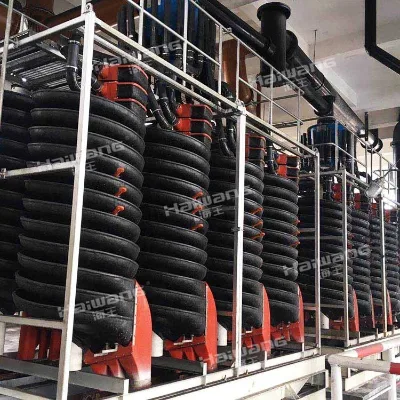
Procuring energy saving gravity separation spiral equipment requires a strategic approach that balances mechanical efficiency with operational cost reduction. These systems are designed to separate minerals based on density differences using centrifugal and gravitational forces, making them essential for rougher and scavenger stages in mineral processing. Buyers must prioritize units that offer customizable configurations to match specific feed characteristics, ensuring optimal recovery rates while minimizing energy consumption. The availability of customization options allows for tailored solutions that address unique material properties, such as particle size distribution and pulp density, which are critical for achieving consistent separation performance.
The market offers a variety of models, including spiral separators and gravity separators, each with distinct operational parameters. Understanding the specific model types, such as those designated by letters like F, H, or SL, is crucial for aligning equipment capabilities with production goals. These models often feature different diameters, pitch spaces, and numbers of runner heads, which directly influence processing capacity and separation efficiency. Buyers should evaluate these technical variations carefully, considering factors like hourly capacity per head and the proportion of heavy ore in the feed, to select the most suitable configuration for their specific application requirements.
Product Scope and Observed Listing Signals
The observed product listings indicate a diverse range of spiral separators and gravity separators, with prices varying significantly from $450 to $30,000 USD. This wide price range reflects differences in model complexity, material construction, and customization levels. Minimum order quantities (MOQ) are generally low, ranging from 1 to 16 units, which facilitates flexible procurement for projects of varying scales. The presence of energy-saving features is a common attribute, suggesting that modern designs focus on reducing power consumption without compromising separation efficiency. Buyers should note that while some listings highlight energy savings, the specific mechanisms and degree of savings may vary between suppliers and models.
Product conditions are consistently listed as new, with warranties typically covering one year. Colors are often multi-colored, which may relate to component identification or aesthetic preferences, while materials include nylon, polyurethane, and carbon steel, each offering different durability and wear resistance properties. The origin of these products is primarily Guangdong, China, indicating a concentrated manufacturing hub for this type of equipment. Buyers should verify the specific material features, such as heat resistance, and ensure that the chosen model meets the required voltage standards, which are listed as either 220V or 380V, to ensure compatibility with existing plant infrastructure.
Technical Specifications to Verify
Verifying technical specifications is critical to ensuring that the selected spiral separator meets the operational requirements of the mineral processing plant. Key parameters to confirm include the diameter of the spiral, which can be 680mm or 1250mm, and the pitch space, which affects the trajectory of the material. The particle size range is another vital specification, with some models handling sizes from 0.02mm to 2.0mm, while others are optimized for finer particles between 0.03mm and 0.30mm. Buyers must match these ranges to their feed material characteristics to avoid inefficiencies or equipment damage, ensuring that the separator can effectively process the intended ore types.
Other important specifications include the number of runner heads, which can be single, twin, or triple, and the number of turns per head, typically ranging from 3 to 13 laps. The hourly capacity of a single head is also a crucial factor, with values ranging from 0.6 to 2.8 tons or 0.8 to 1.5 tons, depending on the model. Additionally, the slurry density and pulp density limits, often specified as less than 35% or 55% by weight, must be considered to ensure proper operation. Buyers should also check the applicable stages, such as rougher, scavenger, or fine grading, to confirm that the equipment aligns with their specific process flow and separation goals.
Compliance and Safety Documentation
Compliance with international standards is essential for ensuring the safety and reliability of gravity separation equipment. Many listings indicate CE certification, which is a mandatory conformity marking for products sold within the European Economic Area. This certification suggests that the equipment meets essential health, safety, and environmental protection requirements. Buyers should request valid CE certificates and verify their authenticity to ensure that the supplier has undergone the necessary conformity assessment procedures. Additionally, ISO 9001 certification is often mentioned, indicating that the manufacturer follows quality management principles, which can be a good indicator of consistent product quality and manufacturing processes.
Safety documentation should also include detailed operational manuals and maintenance guidelines, which are crucial for safe installation and operation. Buyers should ensure that the equipment is designed to operate within specified voltage limits, such as 220V or 380V, and that all electrical components are properly insulated and protected. The use of durable materials like carbon steel and polyurethane contributes to the overall safety and longevity of the equipment, but buyers should verify that these materials meet relevant industry standards for wear resistance and chemical compatibility. Proper documentation helps in troubleshooting and ensures that the equipment operates efficiently and safely throughout its lifecycle.
Cost Drivers and Commercial Terms
The cost of energy saving gravity separation spiral equipment is influenced by several factors, including the model type, material construction, and level of customization. Higher-end models with larger diameters, multiple runner heads, and specialized materials like polyurethane tend to be more expensive. Customization options, such as specific pitch spaces or turn configurations, can also increase the price due to the additional engineering and manufacturing effort required. Buyers should carefully evaluate the total cost of ownership, considering not just the initial purchase price but also the potential savings from energy efficiency and reduced maintenance costs over the equipment's lifespan.
Commercial terms, including payment methods, shipping arrangements, and warranty conditions, play a significant role in the overall procurement strategy. Most suppliers offer a one-year warranty, which provides some protection against manufacturing defects. Packaging is typically done in wooden crates or cases, which helps protect the equipment during transit. Buyers should negotiate clear terms regarding delivery times, installation support, and after-sales service to ensure a smooth procurement process. Understanding these commercial terms helps in budgeting accurately and avoiding unexpected costs associated with shipping, installation, or potential repairs.
Supplier Qualification and Quality Control
Selecting a qualified supplier is crucial for obtaining reliable and high-quality gravity separation equipment. Buyers should verify the supplier's manufacturing capabilities, including their production facilities and quality control processes. Suppliers based in Guangdong, China, often have established supply chains and expertise in producing spiral separators, but buyers should still conduct due diligence to ensure that the supplier meets international quality standards. Requesting references from previous clients and reviewing case studies can provide insights into the supplier's reliability and the performance of their equipment in real-world applications.
Quality control measures should include rigorous testing of components and finished products to ensure they meet specified technical parameters. Buyers should ask for test reports or certification documents that demonstrate the equipment's performance in terms of separation efficiency, durability, and energy consumption. Additionally, suppliers should provide clear documentation on the materials used, such as carbon steel or polyurethane, and their respective properties. Establishing a strong relationship with a qualified supplier can lead to better support, faster response times, and potential discounts for future purchases, making it a valuable long-term investment for the procurement team.
Long-Term Procurement Checks
Long-term procurement success depends on regular monitoring of equipment performance and supplier reliability. Buyers should establish key performance indicators (KPIs) to track the efficiency and durability of the spiral separators, such as separation recovery rates, energy consumption, and maintenance frequency. Regular inspections and preventive maintenance can help identify potential issues early, reducing downtime and extending the lifespan of the equipment. Keeping detailed records of maintenance activities and performance data allows for data-driven decision-making and helps in negotiating better terms with suppliers based on actual usage and performance.
Building a robust supplier relationship is also essential for long-term procurement success. Buyers should maintain open communication with suppliers, providing feedback on equipment performance and addressing any issues promptly. This can lead to continuous improvement in product quality and service. Additionally, staying informed about industry trends and technological advancements can help buyers make informed decisions about future upgrades or replacements. By focusing on long-term value rather than just initial cost, buyers can ensure that their procurement strategy supports the overall efficiency and profitability of their mineral processing operations.
FAQs
What customization options are available for spiral separators?
Customization is available for these spiral separators, allowing buyers to tailor specifications to their specific operational needs. The product line includes both non-customized and customized variants, ensuring flexibility for diverse industrial applications. Buyers can select from single, twin, or triple start configurations to match their processing requirements effectively.
How does the energy saving feature benefit operations?
The energy saving design reduces power consumption during the gravity separation process, lowering overall operational costs. This efficiency is particularly valuable for continuous rougher and scavenger stages. By optimizing the spiral geometry and material usage, the equipment maintains high separation performance while minimizing the electrical load required for slurry processing.
Which certifications ensure product quality and safety?
These spiral separators carry CE and ISO9001 certifications, ensuring compliance with international quality and safety standards. The ISO9001 certification confirms rigorous manufacturing processes, while CE marking indicates adherence to European health, safety, and environmental protection standards. These credentials provide buyers with confidence in the reliability and regulatory compliance of the equipment.
Can the spiral separator handle fine particle sizes?
Yes, the separator is designed to handle fine particle sizes ranging from 0.02 to 2.0 mm, with specific models optimized for 0.03 to 0.30 mm ranges. This capability makes it suitable for fine grading and selection stages. The equipment effectively processes slurry with densities under 55%, ensuring efficient separation of heavy ores within the specified particle size limits.
What is the typical warranty period for this equipment?
The equipment comes with a standard 1-year warranty, providing buyers with assurance regarding product durability and performance. This warranty covers the new condition units manufactured in Guangdong, China. Buyers should review specific terms for customized orders or different models, as warranty conditions may vary based on the selected configuration and supplier agreements.
How is the spiral separator packaged for shipping?
The spiral separators are packaged in wooden crates or cases to ensure safe transportation. Some options allow for customer-specific packing requests to meet unique logistical needs. This robust packaging protects the carbon steel and nylon/polyurethane components from damage during transit, ensuring the equipment arrives in new condition ready for installation and immediate operational use.